You appear to be using incognito/private browsing mode or an ad blocker, which may adversely affect your experience on the site. Please disable any ad blockers and view the site in non-private mode.
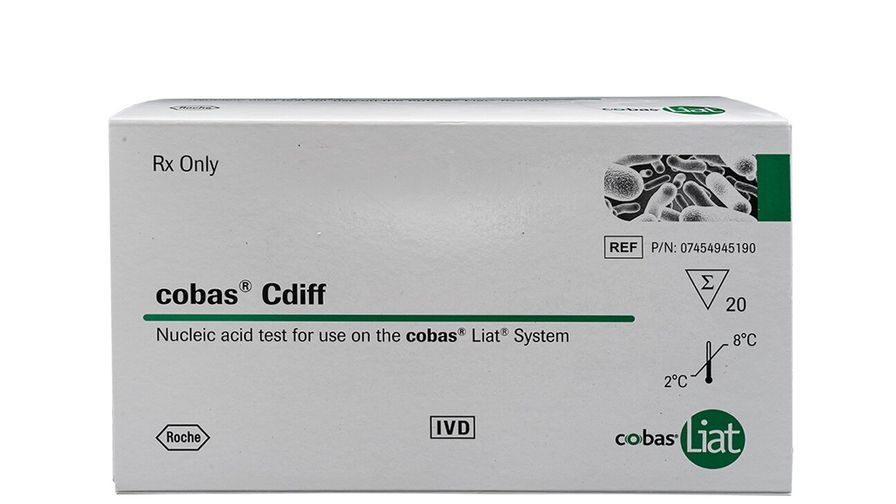
For in vitro diagnostic use. Others cobas Cdiff IVD cobas® Cdiff RMD-Liat-CDIFF-001 Nucleic acid test for use on the cobas® liat system 07 454 945 190 7 454 945 190 07454945190 7454945190 07454945190 KIT COBAS LIAT CDIFF IVD cobas Cdiff 00875197005677 Reagents, kits 1 pack 20 tests true US-IVD and CE-IVD
The cobas® Cdiff Nucleic acid test for use on the cobas® Liat® System is an automated, qualitative in vitro diagnostic test that uses real-time polymerase chain reaction (PCR) for the detection of the toxin B (tcdB) gene of toxigenic Clostridioides difficile (C. difficile) in unformed (liquid or soft) stool specimens obtained from patients suspected of having C. difficile infection (CDI). The cobas® Cdiff Nucleic acid test for use on the cobas® Liat® System is intended for use as an aid in the diagnosis of CDI in humans in conjunction with clinical and epidemiological risk factors. en The cobas® Cdiff Nucleic acid test for use on the cobas® Liat® System is an automated, qualitative in vitro diagnostic test that uses real-time polymerase chain reaction (PCR) for the detection of the toxin B (tcdB) gene of toxigenic Clostridioides difficile (C. difficile) in unformed (liquid or soft) stool specimens obtained from patients suspected of having C.difficile infection (CDI). The cobas® Cdiff Nucleic acid test for use on the cobas® Liat® System is intended for professional use in a clinical laboratory setting or point of care (POC) location as an aid in the diagnosis of CDI in humans in conjunction with clinical and epidemiological risk factors. en Sample preparation
Organisms within the stool specimen are lysed with a chaotropic agent and proteinase K. Released nucleic acids, including Bti Internal Control DNA, are bound by magnetic glass particles. The particles are washed, and bound nucleic acids are eluted into a small volume of buffer and then mixed with Master Mix and activating co-factor for the PCR reaction.
PCR amplification and TaqMan® detection
The Master Mix reagent contains primer pairs and probes for C. difficile toxin B and the Internal Control. If the target nucleic acid sequences are present, amplification with the corresponding primers will occur by a thermostable DNA polymerase, generating PCR products (amplicons). These products are detected by specific TaqMan® probes containing a fluorescent reporter dye and a quencher. Normally, the quencher suppresses the fluorescence of the reporter dye. However, if the PCR product is present, the probe hybridizes to the product and is cleaved by the 5’- to 3’-nuclease activity of the polymerase, thereby separating the reporter dye and quencher. This reaction allows the fluorescence to be emitted from the reporter dye, and the signal is recorded in real time during each PCR cycle by the cobas® Liat® Analyzer. This signal is interpreted by the cobas® Liat® System Software and reported as final results.
Selective amplification
Selective amplification of target nucleic acid from the specimen is achieved in cobas® Cdiff by the use of AmpErase (uracil-N-glycosylase) enzyme and deoxyuridine triphosphate (dUTP). The AmpErase enzyme recognizes and catalyzes the destruction of DNA strands containing deoxyuridine19, but not DNA containing deoxythymidine. Deoxyuridine is not present in naturally occurring DNA, but is always present in amplicon due to the use of deoxyuridine triphosphate in place of thymidine triphosphate as one of the dNTPs in the Master Mix reagent; therefore, only amplicon contain deoxyuridine. Deoxyuridine renders contaminating amplicon susceptible to destruction by AmpErase enzyme prior to amplification of the target DNA. AmpErase enzyme, which is included in the Master Mix reagent, catalyzes the cleavage of deoxyuridine-containing DNA at the deoxyuridine residues by opening the deoxyribose chain at the C1-position. When heated in the first thermal cycling step at the alkaline pH of Master Mix, the amplicon DNA chain breaks at the position of the deoxyuridine, thereby rendering the DNA non-amplifiable. AmpErase enzyme is inactive at temperatures above 55°C, i.e., throughout the thermal cycling steps, and therefore does not destroy target amplicon. cobas® Cdiff has been demonstrated to inactivate at least 1000 copies of deoxyuridine-containing C. difficile amplicon per PCR.
19. Longo, M. C., M. S. Berninger, and J. L. Hartley. 1990. Use of uracil DNA glycosylase to control carry-over contamination in polymerase chain reactions. Gene, 93:125-128.
en