

A powerful portfolio to help end a preventable disease
Partnering to Eliminate Cervical Cancer in the UK

Almost all cervical cancer cases are linked to infection with high-risk human papillomavirus (HPV), an extremely common virus transmitted through sexual contact.-making screening an essential step for prevention.1 Although most HPV infections resolve spontaneously and cause no symptoms, persistent infection can cause cervical cancer. With vaccination, advances in screening and appropriate treatment, cervical cancer is now a preventable disease.
Unfortunately, barriers still exist that prevent some women and individuals with a cervix from ever being screened for cervical cancer. Roche wants to change that. We envision a world where no one dies from cervical cancer, because access to early and accurate screening, diagnosis and treatment is available to everyone, no matter where they live.
Advances in cervical cancer screening and triage
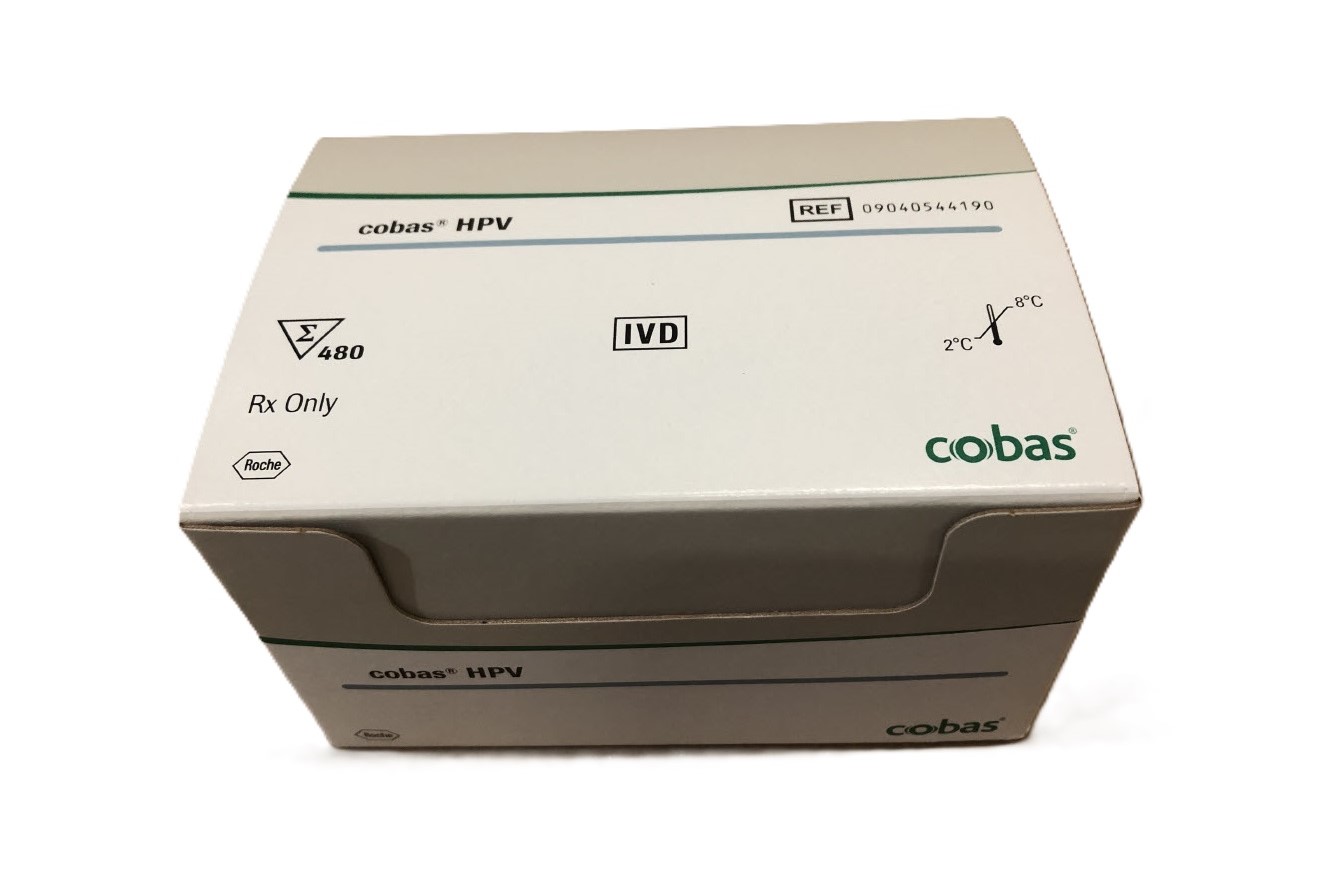
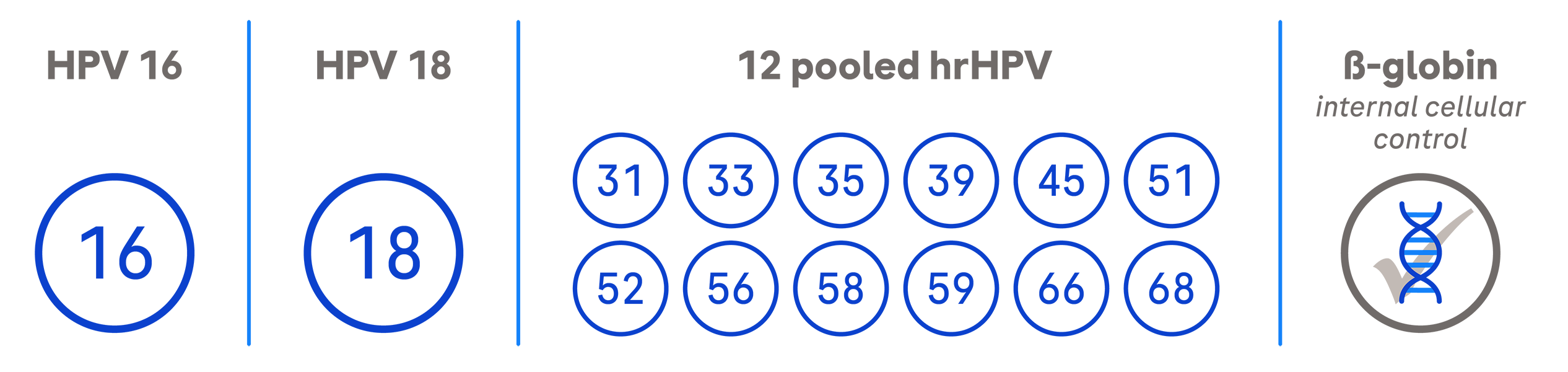
Our cobas® HPV test can detect high-risk HPV genotypes, including HPV-16 and HPV-18 and 12 other pooled genotypes. And, women and people with a cervix can collect their own vaginal sample to make HPV testing for cervical screening more comfortable and accessible.*
A more recent innovation, the dual-stain triage technology, can detect the transformation of HPV-infected cells into precancer. For example, in a dual-stain biomarker triage test, p16 is a biomarker that occurs in normal cells and signifies cell cycle arrest. Ki-67 is also a biomarker that occurs in normal cells and signifies cell cycle division. The test can identify when both biomarkers are present at the same time, indicating that HPV is disrupting the cell cycle and the cell has started to transform.
Many countries, such as the USA and Portugal, have included dual-staining technology in their Cervical cancer screening guidelines to help clinicians triage patients who are positive for the types of HPV that have higher risks of developing cervical cancer. Early detection significantly improves the five-year survival rate, which is 91% for women with invasive cervical cancer when identified early.⁶

A preventable global burden
Despite being nearly 100% preventable with proper HPV vaccination, screening and treatment, cervical cancer remains one of the main causes of death in women.1 In 2022, approximately 660,000 women worldwide were diagnosed with cervical cancer and about 350,000 died from this preventable disease.1 The highest incidence of cervical cancer cases occur in low- and middle-income countries, mainly attributable to lack of access to HPV vaccinations, cervical screening and treatment services.
If diagnosed early, cervical cancer can be treated and cured. At Roche, we envision a world where no one dies from cervical cancer, because access to early and accurate screening, diagnosis and treatment is available to everyone, no matter where they live. Roche’s portfolio, now offering options for self-collection, reaches across geographies and cultures, so no one ever has to die from a preventable disease.
A powerful portfolio for cervical cancer diagnosis
HPV DNA detection is recommended by the World Health Organisation (WHO) as the primary screening test to help achieve cervical cancer elimination.2 The WHO also recommends all countries prioritise screening for cervical cancer, above all other cancers.3
In the quest to eliminate cervical cancer, Roche offers a comprehensive portfolio that goes beyond a single product, offering a strategic path to diagnostic certainty. By leveraging advanced tools such as cobas® HPV for risk assessment, CINtec® PLUS Cytology for immediate triage, and CINtec® Histology for accurate diagnosis, this approach addresses critical points in cervical cancer prevention and management.
With its comprehensive cervical cancer screening portfolio, Roche delivers powerful, clinically proven diagnostic and innovative digital solutions designed to help standardise care and protect all women from a preventable disease. The Roche Cervical Cancer Portfolio provides the right information at the right time with powerful clinical insights at each step with innovative solutions for screening, triage, and diagnosis.
The key to eliminating cervical cancer is more than a product. It is a path.

Cervical Cancer and HPV Screening
Only the Roche Cervical Cancer Portfolio covers the entire spectrum of screening, triage and diagnostic testing.
Cervical screening has evolved to detect potentially precancerous and cancerous processes in the cervix. While HPV testing has played a crucial role, recent technological advancements, including HPV testing, provide better insights into patients' HPV genotypes and identify those at higher risk.
Featuring molecular and biomarker-based tests, our portfolio offers enhanced diagnostic certainty in cervical cancer screening. These advanced tests provide guidance to clinicians and women at every stage of the screening process, eliminating the ambiguity associated with current testing approaches.
Adapting to evolving medical guidelines, the Roche Cervical Cancer Portfolio accommodates various approaches, including co-testing, human papillomavirus (HPV) primary screening, and the more recent dual-stain triage technology. This versatility ensures that the Portfolio remains at the forefront of supporting current and emerging best practices in cervical cancer screening and diagnosis.


cobas® HPV test supports clinicians’ screening methods
The cobas® HPV test objectively identifies women at risk and improves the detection of high-grade disease in a single round of screening, utilising molecular diagnostic testing for the presence of HPV.
The cobas® HPV test is CE-IVDR approved for self-collection. In a healthcare setting, and primary screening, as well as for use with both types of specimen collection vials giving healthcare providers the flexibility to choose the best screening method for patients.3,4
Screen with confidence
The cobas® HPV test is specifically designed to enhance screening accuracy by minimising the risk of false negatives across all high-risk HPV genotypes. Providing three results in one test, it covers the 14 types of high-risk HPV genotypes associated with cervical cancer, including specific results for HPV 16, HPV 18, and 12 other pooled genotypes. This comprehensive approach furnishes essential information for critical clinical decisions.
To help prevent false-negative results, the test monitors the presence of human cells and confirms the completion of reactions. It also demonstrates no cross-reactivity with low-risk HPV genotypes, ensuring that a positive result is truly positive. The reliance on DNA-based testing is backed by 25 years of data, derived from millions of women, supporting the importance of DNA in viral infection replication.⁵
CINtec PLUS is a triage cytology test
Cervical screening has evolved to detect potentially precancerous and cancerous processes in the cervix. While HPV testing has historically played a crucial role, recent technological advancements include HPV testing, provide better insights into patients' HPV genotypes and identify those at higher risk of cervical cancer.
The emergence of dual stain technology allows for the detection of HPV-infected cell transformation into precancer. Early detection significantly improves the five-year survival rate for invasive cervical cancer, reaching 92%.⁶ The CE-IVD approved CINtec® PLUS Cytology dual-stain biomarker triage test, stands as the sole commercially available product in this innovative category.
Detect changes at the cellular level
The CINtec PLUS Cytology test is a dual-stain biomarker-based cytology test FDA-approved for HPV primary screening and HPV-positive and HPV-negative co-testing results. It identifies abnormal cells in cervical cytology samples using p16 and Ki-67 biomarkers to detect transforming HPV infections.⁷
Biomarkers provide an objective interpretation of the drivers behind transforming HPV infection: co-expression of halting and progressive cell division. Co-expression of the two biomarkers, p16 and Ki-67, indicates that HPV is disrupting the cell cycle and has started cell transformation. This additional information may inform greater objective risk and disease stratification when screening for cervical cancer.
CINtec® Histology can diagnose cervical cancer
CINtec® Histology is the only FDA-approved p16 biomarker technology that can help pathologists evaluate cervical biopsy specimens that can confirm the presence of precancerous cervical lesions.⁸
For patients in need of a colposcopy, CINtec® Histology provides a more objective interpretation of cervical biopsies and, in one trial, decreased potentially false negative results by 43%.⁷
Our test detected 85 out of 100 biopsies with the disease compared to 73 out of 100 with hematoxylin and eosin stains.⁷

IMPACT Trial
Recognising the existing health disparities in cervical cancer, particularly affecting Black and Hispanic-Latina women, the IMPACT Trial design validated the clinical benefits of the cobas® HPV Test, CINtec® PLUS Cytology test and CINtec® Histology.¹
This study deliberately included diverse patient segments, with 21% Black, 24% Hispanic-Latina, and 0.3% American Indian or Alaskan Native participants.² By incorporating this diversity into clinical trials, Roche aims to accurately reflect patient populations with higher incident rates of HPV, contributing to efforts to address health disparities in cervical cancer.
In the trial, CINtec® PLUS Cytology detected cervical disease earlier in seven out of 10 women who were already identified as HPV positive.⁷ CINtec® PLUS is a triage cytology test that helps stratify disease risk immediately, giving clinicians confidence when selecting the appropriate management for women at every level of risk.
References
- Centers for Disease Control. Last accessed January 2, 2024.
- Wright TC Jr, Stoler MH, Ranger-Moore J, Fang Q, Volkir P, Safaeian M, Ridder R. Clinical validation of p16/Ki-67 dual-stained cytology triage of HPV-positive women: Results from the IMPACT trial. Int J Cancer. 2021 Sep 18. doi: 10.1002/ijc.33812. Online ahead of print.
- cobas® HPV test package insert.
- cobas® HPV Test for cobas® 6800/8000 package insert.
- Doorbar J, Quint W, Banks L, Bravo IG, Stoler M, Broker TR, Stanley MA. The biology and life-cycle of human papillomaviruses. Vaccine. 2012 Nov 20;30 Suppl 5:F55-70. doi: 10.1016/j.vaccine.2012.06.083. PMID: 23199966.
- Cancer.net. January 2, 2024.
- CINtec® PLUS Cytology package insert.
- CINtec® Histology 510(k) package insert.
A leader in cervical cancer diagnosis, with trusted experience
A focus on the science of HPV has led to an evolution in cervical cancer screening strategies to better stratify patient risk and improve outcomes. With the best scientists, and continuous commitment to the elimination of cervical cancer, we have built our organisation around always striving to meet our customers’ needs and improve patient care.
Our holistic solution for cervical cancer screening, triage, diagnosis and patient management is the most broadly recommended in guidelines to answer four questions that change lives and communities:
- Are they at risk?
- What do they need now?
- Am I certain of their diagnosis?
- How can I track and manage their care?
Roche's portfolio, now offering options for self-collection, reaching across geographies and cultures, so no one ever has to die from a preventable disease.
Roche has a long history as a scientific leader and innovator, driving cervical screening strategies and a change from the status quo, because we believe women deserve better. Roche continues to make significant investment in the cervical screening portfolio and in new product development, backed by strong clinical study evidence. In cervical cancer screening, with the goal of elimination in mind, we also recognise that digital innovations can bring efficiencies and scale to population-based programmes, and, with attention that also zeroes in at the patient level, we help to ensure that no one is left behind.
We launched the very first:
- FDA approved, CE mark, and WHO Prequalified cobas® HPV test for primary cervical screening.
- FDA approved, CE mark dual-stain immunocytologic CINtec® PLUS Cytology triage test.
- FDA cleared, CE mark diagnostic p16 biomarker immunohistochemistry test (CINtec® Histology).
- navify® Cervical Screening - Digital programme management solution for cervical screening.
Roche remains a leader in in vitro diagnostics (IVD), trusted by customers around the globe, with over 29 billion tests completed in 2022.4
Every two minutes, a woman dies of cervical cancer, which is preventable.¹
Cervical cancer is one of the most preventable cancers today due to vaccination, screening and early treatment. Yet it is still responsible for thousands of deaths each year.²
Unlike most cancers, cervical cancer is caused by an infection – human papillomavirus (HPV).³
Four out of five women will be infected with HPV at some point in their lives.⁴ Most of the time, HPV infections clear naturally and do not cause cancer. While there are more than 200 different strains of HPV,⁵ there are 14 genotypes that are most commonly associated with cervical cancer.




The importance of cervical cancer screening
Regular cervical screening can help detect changes before cancer develops.1 Screening is key to reducing the risk of developing cervical cancer. All women above age 21,16 or once sexually active, need cervical cancer screening, no matter their sexual orientation, relationship status or HPV vaccine status.⁹
There are two options healthcare providers use to screen: the Pap and HPV tests. The two screening options can be done together or independently, depending on age or medical history and the doctor’s recommendation. In the UK and Ireland, HPV testing is the first line of screening, where the assay looks for the presence of HPV in the sample. If HPV is found, a cytology test is used as a triage to check for any abnormal cells.

HPV test
An HPV test detects high-risk human papillomavirus.
An HPV test detects the DNA of high-risk HPV at infection that may lead to high-grade cervical disease or precancer. The sample needed for an HPV test is taken from the cervix by a healthcare provider in the same way as the Pap test. Women and people with a cervix also may have the option of taking their own vaginal sample in a healthcare setting to make HPV testing for cervical screening more comfortable and accessible. Samples taken by a clinician or by the women being screened are then sent to a lab to be tested for high-risk HPV on an automated instrument using molecular technology. HPV tests give an early, accurate look at cervical cancer risk.

Cervical citology
A cervical citology looks for abnormal cells on the cervix that can indicate early signs of cancer.
The Pap test has been in use for around 80 years; it looks for abnormal cells growing on the cervix that can be early signs of cancer. A healthcare provider collects cell samples from the cervix and sends the sample to a laboratory for examination under a microscope by a trained professional. However, a normal Pap result does not always mean cancer-free: Up to one-third of cervical cancers occur in women with a normal Pap.10
The difference between the two screening tests is that cervical cytology looks for changes in cells before they develop into cancer.
The HPV test looks for high-risk HPV genotypes to better manage risk for cervical cancer. Receiving an HPV test can better predict one’s risk of cervical cancer.
Roche offers the cobas® HPV test. The test is used in cervical cancer screening to determine a woman's risk of precancer or cancer. The test provides individual results for high-risk HPV genotypes 16 and 18 and a combined result for 12 other high-risk genotypes.
Receiving a positive HPV diagnosis
A positive HPV result can feel worrying but it’s important to know that HPV is very common, and most infections do not lead to cancer. Most women who are HPV-positive will not develop cervical cancer.11
Triage typically occurs when women test positive for high-risk HPV genotypes. Common high-risk genotypes are HPV 16 and HPV 18, which account for 66% of cervical cancer.12 The other high-risk genotypes are: 31, 33, 45, 52 and 58.13
After receiving a positive result for a high-risk HPV genotype, there are different steps that can be taken.14
- Some healthcare providers may suggest waiting another year to see if the infection will clear on its own.
- A healthcare provider could request that the sample be sent for a triage test to know if the infection is progressing.
- With certain types of high-risk HPV, a healthcare provider may want to biopsy to see if pre-cancer or cancer is present.
Roche’s CINtec® PLUS Cytology is a triage cytology test that helps stratify disease risk immediately. The dual-stain test gives women better information about whether their HPV infection is transforming into pre-cancer without having to wait a potentially anxious year for re-testing.

Let's Talk Cervical Screening
The Let’s Talk Cervical Screening campaign is a targeted initiative designed to increase uptake of cervical screening across the UK. By focusing on areas with lower attendance, it combines GP-led outreach, local marketing campaigns, and community events to raise awareness, address barriers, and encourage more people to attend screening appointments.
Explore more
References:
- World Health Organisation. Cervical cancer fact sheet [Internet; cited 3 July 2024]. Available from: https://www.who.int/news-room/fact-sheets/detail/cervical-cancer.
- World Health Organisation. WHO guideline for screening and treatment of cervical pre-cancer lesions for cervical cancer prevention [Internet; cited 3 July 2024]. Available from: https://www.who.int/publications/i/item/9789240030824.
- World Health Organisation. WHO report on cancer: setting priorities, investing wisely and providing care for all [Internet; cited 3 July 2024]. Available from: https://www.who.int/publications/i/item/9789240001299.
- F. Hoffmann-La Roche Ltd. Annual Report 2022 [Internet; cited 2024 July 3]. Available from: https://assets.cwp.roche.com/f/126832/x/7cd4e2ba4c/ar22e.pdf.
- F. Hoffmann-La Roche Ltd. cobas HPV Qualitative nucleic acid test for use on the cobas 5800/6800/8800 Systems Method Sheet. (v2.0). 2024.