You appear to be using incognito/private browsing mode or an ad blocker, which may adversely affect your experience on the site. Please disable any ad blockers and view the site in non-private mode.
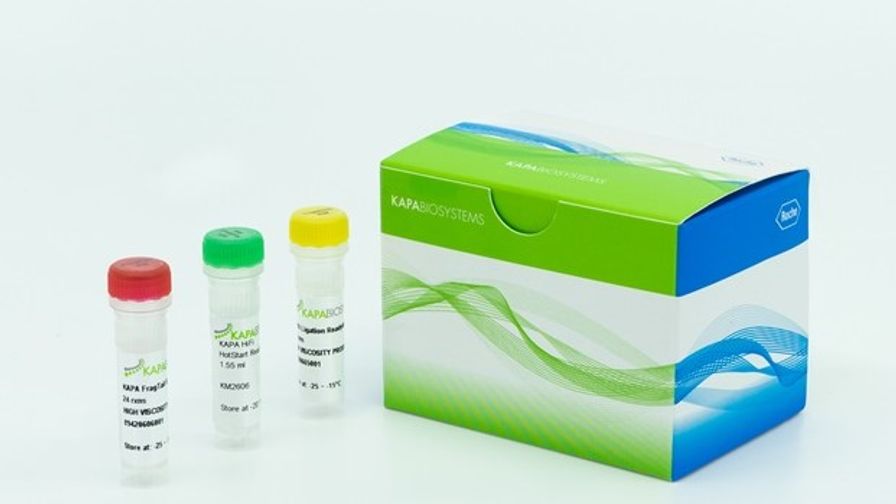
For Research Use Only. Not for use in diagnostic procedures. Others KAPA EvoPlus V2 Boost Kit PCR-free RUO KAPA EvoPlus V2 Boost Kit, PCR-free PID00001234 09 420 436 001 9 420 436 001 09420436001 9420436001 09420436001 KAPA EvoPlus Boost PCR free plt 96rxn KAPA EvoPlus Boost PCR free plt 96rxn 07613336184561 Reagents, kits 96 well plate Not Available undefined 09 420 371 001 9 420 371 001 09420371001 9420371001 09420371001 KAPA EvoPlus Boost PCR free 384rxn KAPA EvoPlus Boost PCR free 384rxn 07613336184523 Reagents, kits 384 reactions Not Available false 09 420 304 001 9 420 304 001 09420304001 9420304001 09420304001 KAPA EvoPlus Boost PCR free 96rxn KAPA EvoPlus Boost PCR free 96rxn 07613336184509 Reagents, kits 96 reactions Not Available false 09 420 045 001 9 420 045 001 09420045001 9420045001 09420045001 KAPA EvoPlus Boost PCR free 24rxn KAPA EvoPlus Boost PCR free 24rxn 07613336184172 Reagents, kits 24 reactions Not Available KAPA EvoPlus Boost Kits are ideally suited for low- and high-throughput Next-Generation Sequencing (NGS) library construction workflows that require DNA fragmentation, A-tailing and adapter ligation. Kits are designed for library construction from a wide range of sample types and inputs (50 ng – 500 ng), and are compatible with genomic DNA and low quality DNA such as that extracted from formalin-fixed, paraffin-embedded tissue (FFPET) samples. These kits are ideally suited for germline as well as somatic mutation detection. They are automation-friendly and may be used for the following workflow applications:Whole-genome sequencing (WGS).Whole exome sequencing (WES) or targeted sequencing, using hybridization capture methods.The KAPA EvoPlus Boost Kits contain an enzymatic fragmentation module that is NOT validated for use in Methyl-Seq applications. The enzymatic fragmentation chemistry involves DNA repair mechanisms that may affect methylation patterns en