For localized information and support, would you like to switch to your country-specific website for {0}?

- Insights
- Diagnostics insights
- Coagulation self-monitoring with CoaguChek®

Coagulation self-testing means less time at the clinic
Self-testing with CoaguChek® gives you the freedom to test your INR levels yourself, anytime you like. Self-testing at home can give you better control of your medication than testing at a laboratory or doctor’s office, with more time in your therapeutic range. Your doctor will receive and monitor your results, so when your dose does need changing, you can find out sooner.
What is time in therapeutic range (TTR) and why is it important
The TTR is the percentage of time a patient spends with an INR level that is deemed ideal for their condition.
The therapeutic range is quite narrow, and INR can be affected by many factors, including diet and other medical conditions.
By monitoring INR, VKA dosage can be adjusted as required to maintain a high TTR.
However, infrequent testing can mean that deviations of INR outside of the TR may not be determined for a period of time.


More frequent monitoring of INR levels together with lifestyle changes can help maximize time you spend within therapeutic range.1
Every model of care is trying to achieve the highest TTR possible.
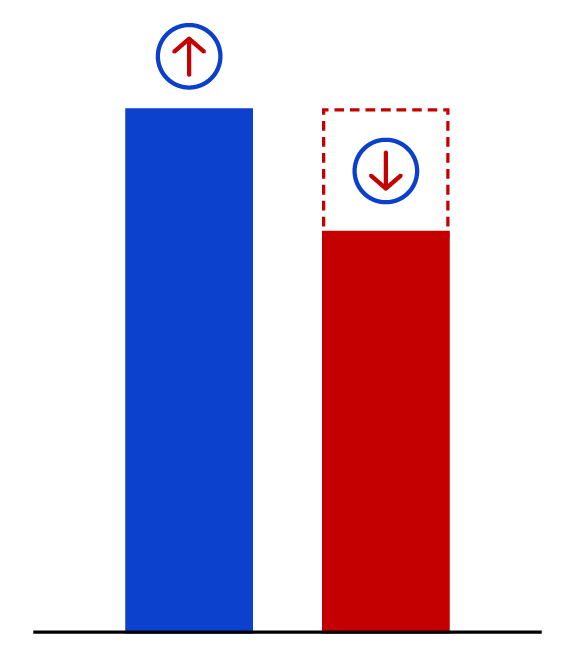
A high TTR is directly linked to a reduced rate of adverse effects2-4

☑️ > 65 - 75 %
A high TTR demonstrates a high quality of anticoagulation management (HQACM)1,5-7
Quality care for your patients taking vitamin K antagonists
Vitamin K antagonists (VKAs) require close monitoring because of individual variations, drug-drug or food-drug interactions.8 Studies have shown that increasing a patient’s time in therapeutic range, as measured by their international normalized ratio (INR) value, maximizes the benefits of anticoagulation therapy and minimizes the risk of thromboembolic events.9-11 Therefore, keeping careful track of your patient's INR value to ensure it is in the optimal therapeutic range is critical.
Models of patient monitoring
Enhance efficiency for you and freedom for your patient
A variety of models exists for managing patients of VKA therapy. Learn more about the benefits of point of care and patient self-testing and how we can support you in selecting the right model for you and your patients.


Traditional or usual care
Performed by a conventional laboratory. Results can take hours if not overnight to be returned to the physician. The healthcare professional interprets the result and, if needed, changes the patient’s dosage. The patient may have to wait for the results, or even return to the physician after the result is delivered.

Point of care testing
Performed by healthcare professionals immediately at the patient point of care. CoaguChek offers reliable and easy to use solutions that provide immediate results. Thus, allowing treatment decisions to be made more quickly.
Patient self-testing
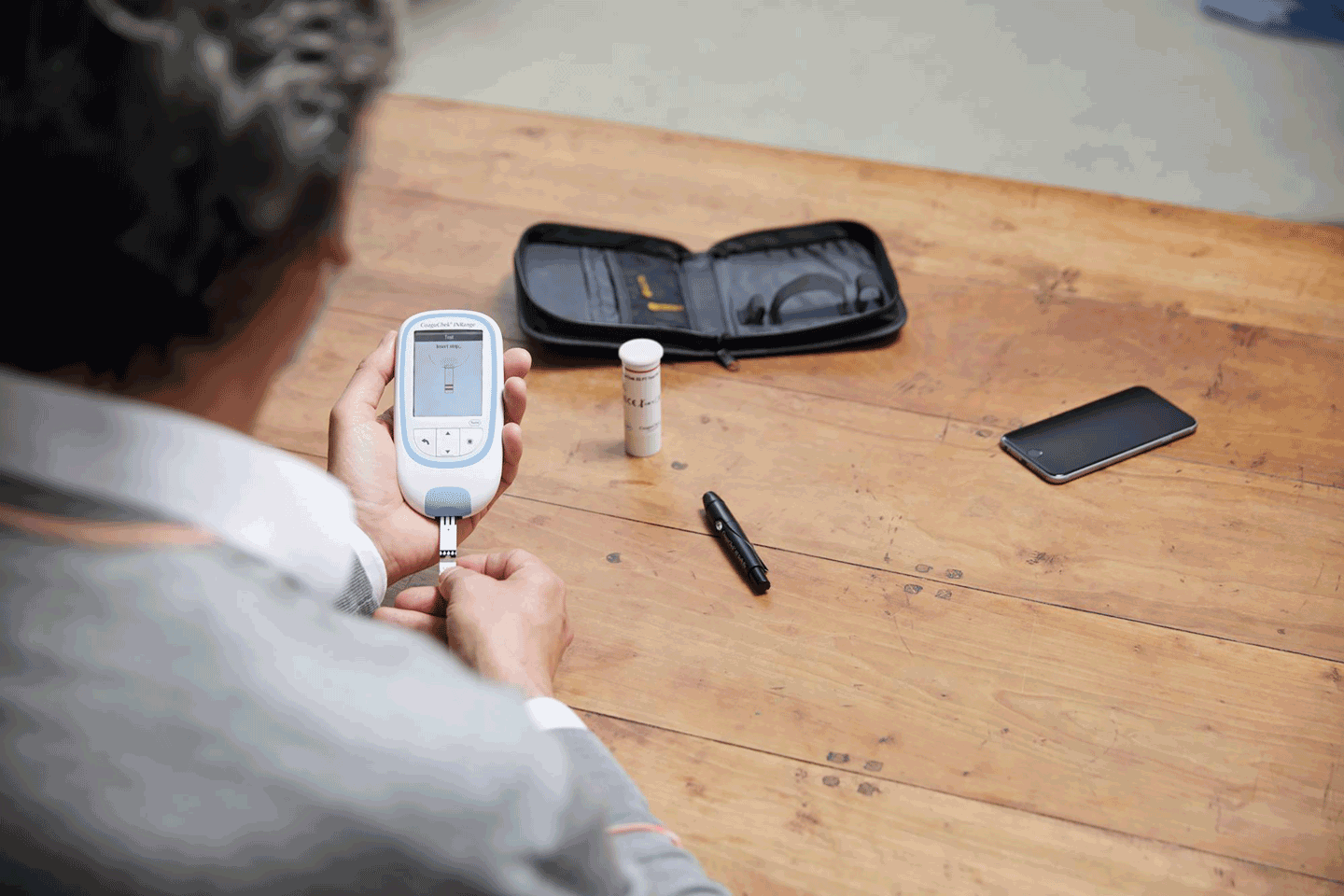
Together with you, properly trained patients and/or caregivers are capable of performing reliable INR testing themselves. This method of coagulation monitoring may provide some patients with the maximum amount of freedom to suit their testing needs.
Contact us
Do you have questions about our products or services? We’re here to help. Contact a Roche representative in your region.
Contributors

Roche Diagnostics
Roche Diagnostics is a division of Roche, developing and integrating diagnostic solutions that address today’s healthcare challenges while anticipating tomorrow’s needs. In more than 100 countries, we provide one of the industry’s most comprehensive in vitro diagnostics portfolios spanning molecular diagnostics, clinical chemistry and immunoassays, tissue diagnostics, Point of Care testing, patient self-testing, next-generation sequencing, laboratory automation and IT, as well as digital health and decision-support solutions.
Our articles are authored by Roche Diagnostics subject matter experts, drawing on collective expertise across multiple disciplines to provide reliable insights for healthcare professionals worldwide.
Explore articles from our community


?wid=384&hei=216&fmt=png-alpha&fit=crop,1&cropn=0.07,0,0.86,1)


?wid=384&hei=216&fmt=png-alpha&fit=crop,1&cropn=0.07,0,0.86,1)


No insights found
References
- Kirchhof, P. et al. (2016). Eur Heart J. 37(38), 2893-2962.
- Phillips, K.W. & Ansell, J. (2008). Expert Rev Cardiovasc Ther. 6(1), 57-70.
- Wan, Y. et al. (2008). Gire Cardiovasc Qua/ Outcomes. 1 (2), 84-91.
- Holbrook, A. et al. (2012). Chest. 141(2), el 52S-e184S.
- Lane, D.A. et al. (2015). Europace. 17(12), 1747-69.
- De Caterina, R., et al. (2013). Thromb Haemost. 110(6), 1087-107.
- Sjogren, V. et al. (2015). Thromb Haemost. 1 13(6), 1370-7.
- Vranckx, P., Valgimigli, M., Heidbuchel, H. (2018). The Significance of Drug-Drug and Drug-Food Interactions of Oral Anticoagulation. Arrhythmia & electrophysiology review, 7(1), 55–61.
- Wan, Y. et al. (2008). Anticoagulation control and prediction of adverse events in patients with atrial fibrillation: a systematic review. Circulation. Cardiovascular quality and outcomes, 1(2), 84–91.
- Holbrook, A. et al. (2012). Evidence-based management of anticoagulant therapy: Antithrombotic Therapy and Prevention of Thrombosis, 9th ed: American College of Chest Physicians Evidence-Based Clinical Practice Guidelines. Chest, 141(2 Suppl), e152S–e184S.
- Phillips, K. W., Ansell, J. (2008). Outpatient management of oral vitamin K antagonist therapy: defining and measuring high-quality management. Expert review of cardiovascular therapy, 6(1), 57–70.