For localized information and support, would you like to switch to your country-specific website for {0}?


Explore, discover, and harness the genomic secrets of the living world
Next-generation sequencing (NGS) has revolutionized our understanding of living systems, supporting significant advances in biology, medicine, agriculture, ecology, and biotechnology. Unlike first-generation or Sanger sequencing, NGS enables the sequencing of millions of DNA fragments in parallel.
Continuous innovation over the past two decades has led to a remarkable reduction in the cost of sequencing and turnaround times, facilitating broader access and catalyzing the rapid proliferation of NGS applications. In clinical and translational research specifically, NGS has deepened the understanding of disease inheritance, enabled the identification of biomarkers, assisted in the development of new diagnostic tests and treatments, and played a pivotal role in managing pathogen outbreaks.
Roche’s extensive portfolio of Research Use Only sequencing solutions supports a broad range of NGS applications across different fields of research, such as oncology, inherited disease, infectious disease, reproductive health, microbiology, pharmacology, agribiology, and ecology. The portfolio is based on the following experimental approaches:
Whole genome sequencing (WGS)
Whole exome sequencing
Targeted sequencing (including comprehensive genomic profiling)
RNA sequencing (including whole transcriptome sequencing (WTS), sequencing of small and non-coding RNAs, and spatial transcriptomics)
Epigenetic analysis (e.g., methylation profiling, ChiP-seq, and ATAC-seq)
Metagenomic WGS and WTS, and
Multi-omic analyses
Roche’s solutions can utilize a wide variety of sample types (genomic DNA, cell-free DNA, and RNA) from blood, formalin-fixed paraffin-embedded (FFPE) and fresh/frozen tissue, biological fluids from humans, animals, plants, and microbes, and environmental samples.
Featured products
RUO
For Research Use Only. Not for use in diagnostic procedures.
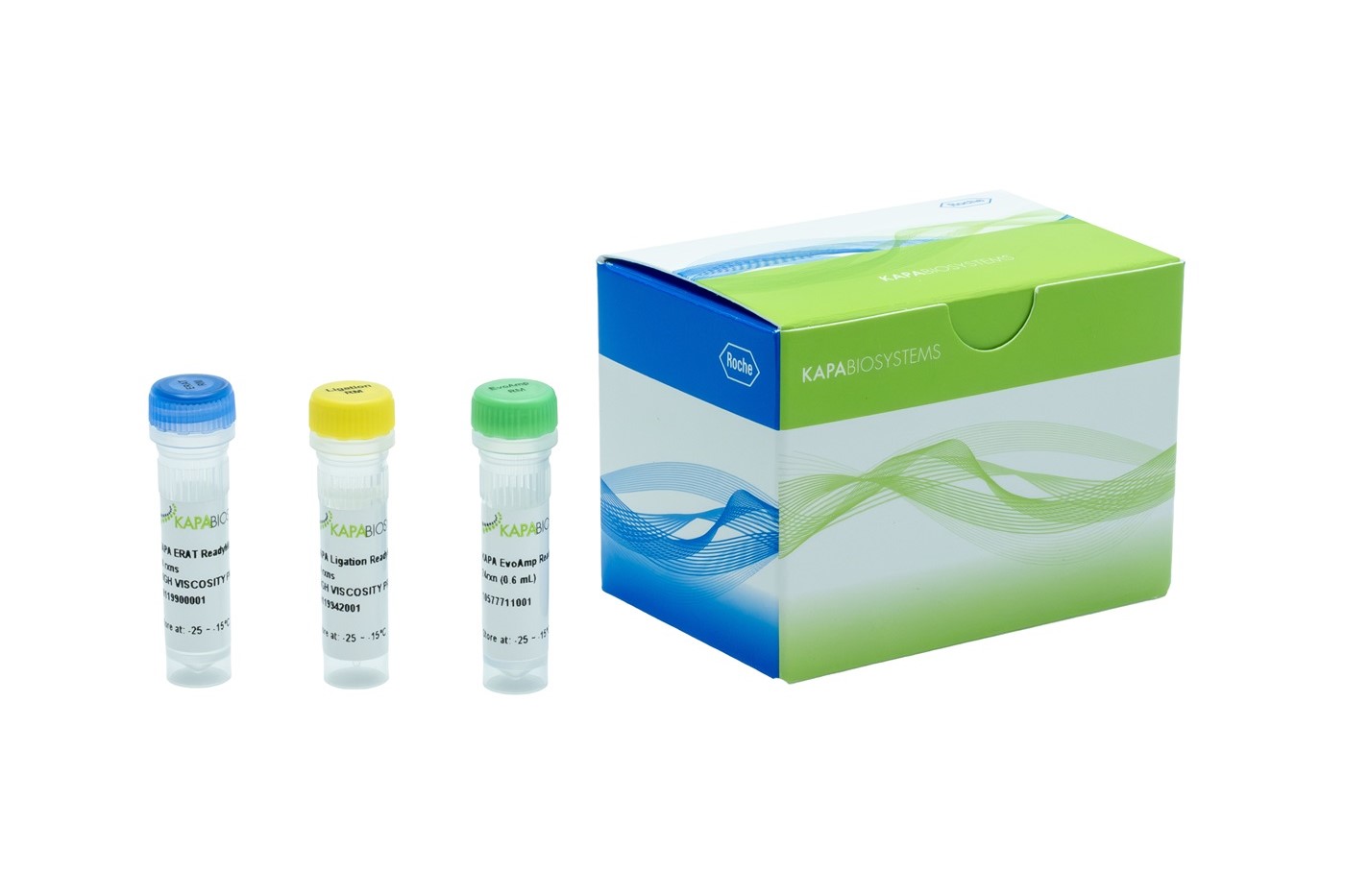
KAPA EvoPrep Kits
KAPA EvoPrep Kits enable pre-fragmented DNA library prep for WGS, WES, targeted sequencing, and methyl-seq with a streamlined, fully automatable workflow.
RUO
For Research Use Only. Not for use in diagnostic procedures.
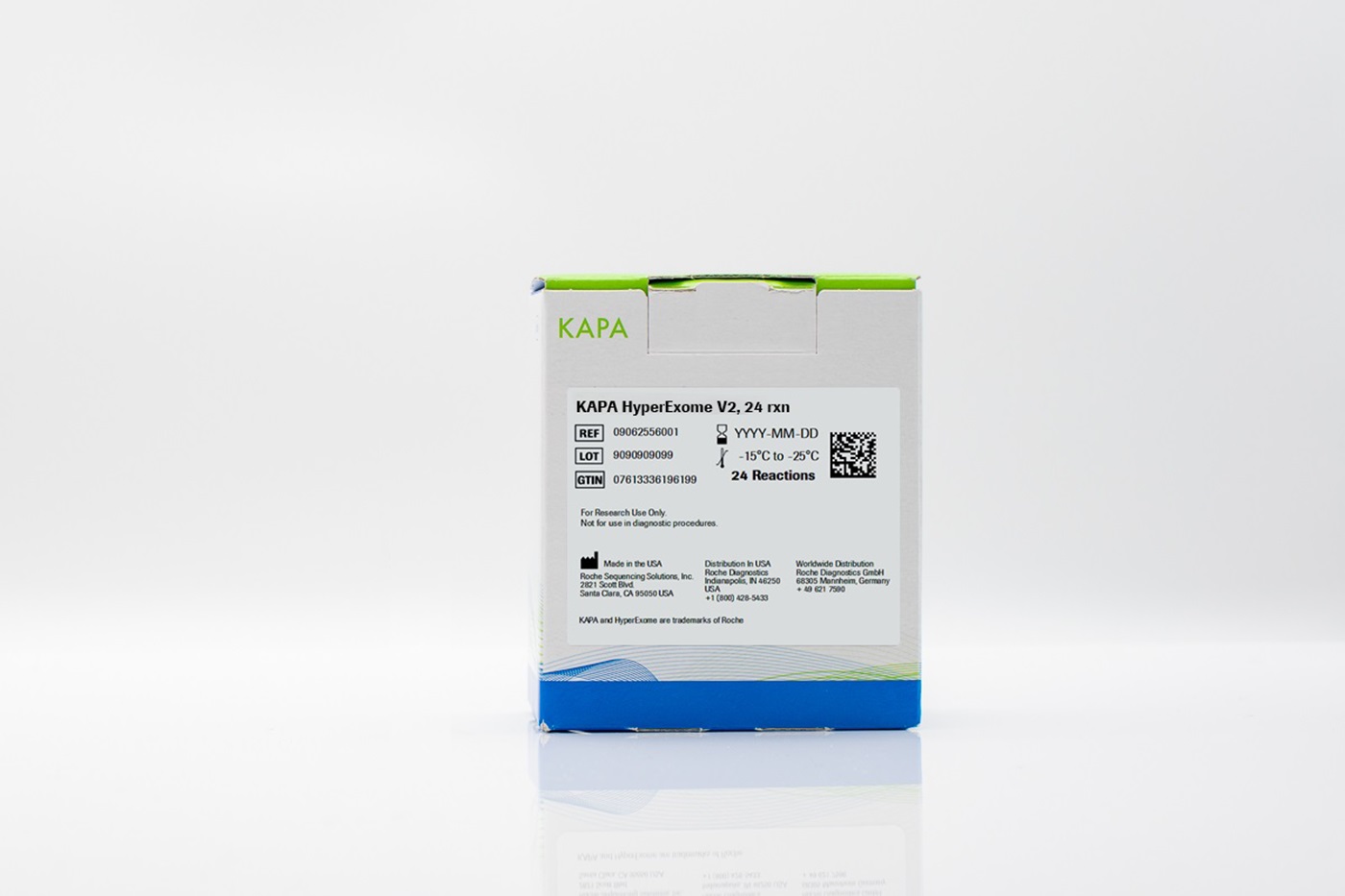
KAPA HyperExome V2 Probes and Kits
The KAPA HyperExome V2 Probes are Roche's brand new Whole Exome Sequencing solution delivering superior content coverage.
RUO
For Research Use Only. Not for use in diagnostic procedures.
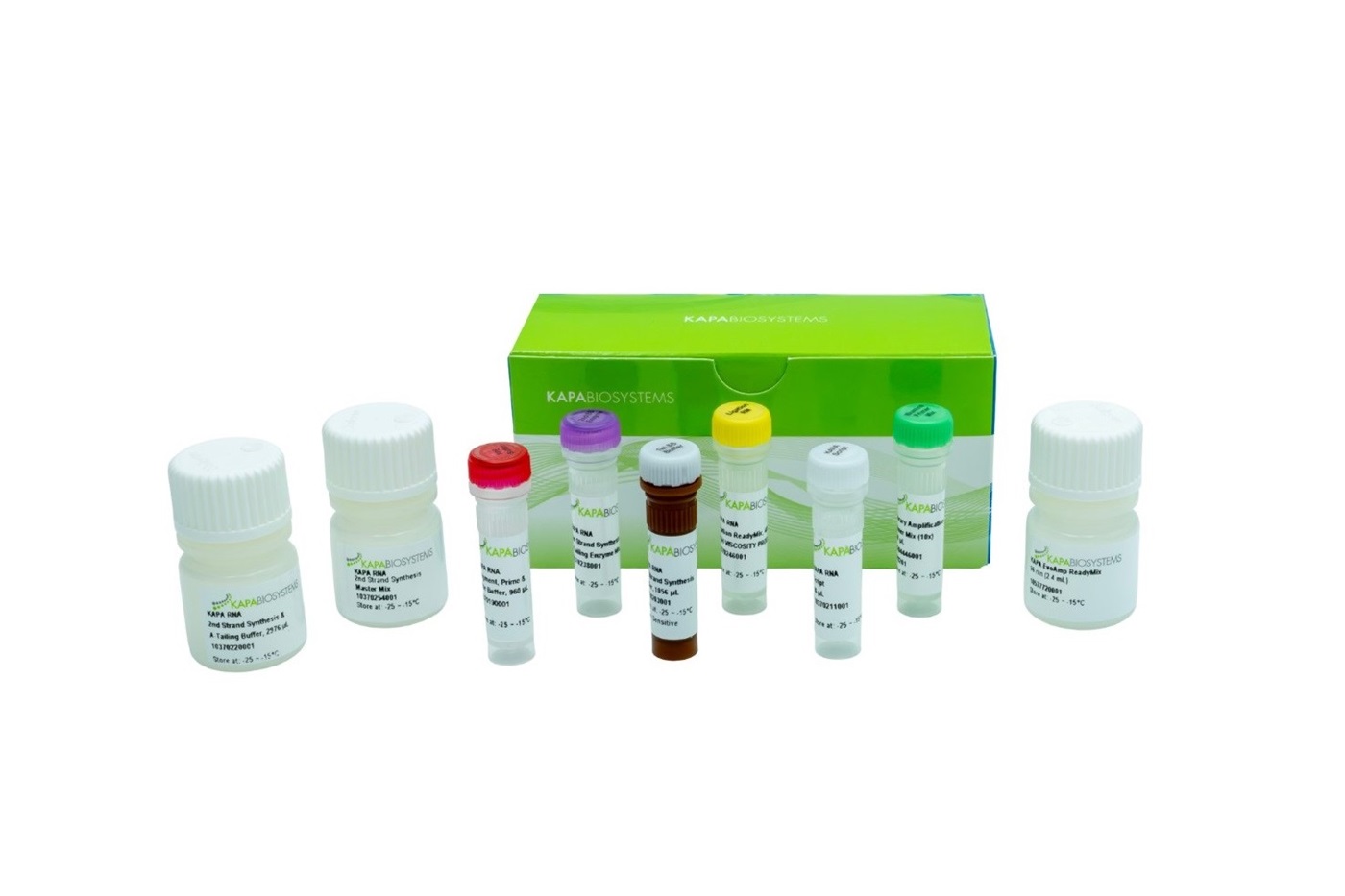
KAPA RNA EvoPrep Kits
Maximize Every Read. Our new KAPA RNA EvoPrep Kit shortens workflow, boosts sequencing efficiency, captures more unique transcripts, and accelerates discovery.
NGS applications and benefits, by workflows
Whole genome sequencing
A holistic picture of an organism’s entire genome
Whole genome sequencing (WGS) aims to obtain the full picture of an organism’s entire genome—both coding and non-coding regions. De novo WGS is typically used to construct new reference genomes, which enable the identification and characterization of genetic variation in individuals of the same, or closely related, species. WGS experiments are usually designed for 30 - 50x average coverage depth, but higher coverage may be required in some applications to achieve the desired mutation detection accuracy.2 Due to its breadth of coverage, WGS enables the analysis of all mutation types (single-nucleotide polymorphisms (SNPs), small insertions and deletions (indels), and structural variants, such as copy number variation (CNV) and translocations),1 and is routinely used in the following applications:
- Germline/hereditary disease research
- Rapid decision making in pediatric neonatal care units (NICUs)
- Analysis of rare and complex diseases
- Population genetics and genome-wide association studies (GWAS)
- Pathogen surveillance
- Forensics
Specialized versions of WGS include:
- Low-coverage WGS (0.1x to 5x coverage),3 which leverages the power of NGS for genotyping and cytogenomics, and offers a cost-effective approach for large-scale structural variant detection, trait mapping, and pharmacogenomic studies
- Whole genome metagenomics, in which all of the genetic material in samples comprising highly complex microbial populations (e.g., the human microbiome) are sequenced to identify species, determine relative abundance, and identify genetic and metabolic pathways
Roche’s DNA library preparation solutions are ideally suited for a wide range of WGS applications. Automation-friendly KAPA EvoPrep and KAPA EvoPlus Kits offer the following benefits:
- Support for a wide range of input amounts, from a broad variety of sample types
- Simplification of library prep and reduction of turnaround times through the use of readymixes, fewer reagent additions, and tube transfers
- Industry-leading molecular recovery rates (even from challenging samples) through the use of the engineered KAPA EvoT4 ligase
- Reliable results and high-confidence variant analysis by limiting experimental (fragmentation and amplification) error and bias
- PCR-free workflows supported from as low as 50 ng
- Cost savings through consistent performance and success rates across many sample types and applications
- Uniform coverage that translates to improved sequencing efficiency4
Featured products
RUO
For Research Use Only. Not for use in diagnostic procedures.

KAPA EvoPlus Kits
KAPA EvoPlus Kits offer reliable, high-performance DNA library preparation with enhanced enzymatic fragmentation and a streamlined, fully automatable workflow.
RUO
For Research Use Only. Not for use in diagnostic procedures.
KAPA EvoPrep Kits
KAPA EvoPrep Kits enable pre-fragmented DNA library prep for WGS, WES, targeted sequencing, and methyl-seq with a streamlined, fully automatable workflow.
RUO
For Research Use Only. Not for use in diagnostic procedures.
KAPA Library Amplification Kits
KAPA Library Amplification Kits are next-generation solutions for NGS library amplification, delivering uniformity across the GC-range, and high-fidelity results.
...
Whole exome sequencing
Focusing on coding regions of the genome
Whole exome sequencing (WES) is a specific NGS application that provides coverage of ≥95% of the protein-coding (expressed) regions of the genome. Exonic and adjacent untranslated regions (UTR) comprise about 1% of the genome, but harbor the majority (85%) of disease-causing variants.5 WES is particularly well-suited for the detection of SNPs and indels, but is also capable of providing information on CNVs and structural variants. Although the WES sample preparation workflow (which requires enrichment with exome probes) is more complicated than for WGS, it offers significantly lower sequencing cost and a reduced analysis burden. WES is now routinely used in:
- Mendelian disease research
- Research of pediatric, rare, and complex diseases - particularly where single-gene or small panel investigations have failed to yield a possible genetic cause
- Oncology research
Exome probe sets have target sizes in the region of 30 - 60 Mb. Smaller exome panels may focus on actionable content, whereas larger target sizes typically include more adjacent, non-coding content to provide for the discovery of novel variants. The databases and algorithms used for probe design/selection are critical to ensure that all mutations of interest are adequately covered and minimize empirical optimization.
Roche provides highly optimized, end-to-end solutions for exome sequencing using both manual and automated sample prep workflows.
- Exome probes are based on the most recent genetic databases, expertly designed and selected, and empirically optimized for Roche sample preparation chemistries.
- Every lot of exome probes undergoes functional quality control (QC) testing to ensure quality and consistency.
- The automation-friendly KAPA HyperCap Evolved Workflow offers streamlined construction of high-quality libraries. An analytically validated WES sample preparation workflow for the AVENIO® Edge System offers walk-away automation.
- High-quality libraries and superior probe design ensure excellent target enrichment metrics, high coverage uniformity, and low duplication rates; all of which contribute to sequencing efficiency and economy.4
- Easily integrated secondary and tertiary analysis and reporting, available via third-party collaborations and the Roche navify® Mutation Profiler, ensure reliable variant calls and comprehensible reporting.
Featured products
RUO
For Research Use Only. Not for use in diagnostic procedures.
KAPA HyperExome V2 Probes and Kits
The KAPA HyperExome V2 Probes are Roche's brand new Whole Exome Sequencing solution delivering superior content coverage.
RUO
For Research Use Only. Not for use in diagnostic procedures.
KAPA EvoPlus Kits
KAPA EvoPlus Kits offer reliable, high-performance DNA library preparation with enhanced enzymatic fragmentation and a streamlined, fully automatable workflow.
RUO
For Research Use Only. Not for use in diagnostic procedures.
KAPA EvoPrep Kits
KAPA EvoPrep Kits enable pre-fragmented DNA library prep for WGS, WES, targeted sequencing, and methyl-seq with a streamlined, fully automatable workflow.
...
Targeted sequencing
Focusing on specific genomic regions of interest
Targeted sequencing generally refers to the analysis of defined and relatively small (<10 Mb) genomic regions of interest using next-generation sequencing (NGS). Reducing the targeted size allows for very deep coverage (precise analysis of low-frequency variants) and/or reduced per-sample sequencing cost. Targeted sequencing may be performed with pre-designed/analytically validated probe panels or assay, or with user-defined content. Both hybridization- and amplicon-based strategies are used to prepare and enrich libraries. Targeted sequencing is widely used in:
- Oncology research, particularly to track driver mutations
- Comprehensive genomic profiling (CGP) to analyze actionable germline or somatic variants
- Infectious disease analysis and surveillance
- Human Leukocyte Antigen (HLA) typing and other pharmacogenomic research applications
Content and probe performance are key to successful targeted sequencing. Probe sets must be designed to ensure that all desired variants are covered to the desired depth across all regions of interest, some of which may pose significant challenges to specificity and uniformity.
Roche offers a portfolio of solutions for versatile, high-confidence targeted sequencing.
- Our user-friendly, expert designer-assisted HyperDesign tool simplifies custom NGS panel design. With HyperDesign, you can create high-performing probe panels for almost any region of interest that does not require extensive empirical optimization4
- Catalog Design Share panels are pre-designed in collaboration with leading researchers for optimal coverage of relevant content in popular research areas
- Choose from the hybridization-based KAPA HyperCap Evolved Workflow or amplicon-based KAPA HyperPETE Workflow to achieve streamlined and robust sample prep that best suits your project scope, objectives, and operational constraints
- High molecule recovery with the KAPA EvoT4 Ligase, and high-fidelity, low-bias amplification with the KAPA EvoAmp ReadyMix mitigate against content distortion, even when preparing libraries from low inputs and challenging samples
- AVENIO Oncology Assay kits provide validated, easy-to-implement end-to-end solutions for in-house tumor profiling, CGP, surveillance, and monitoring
Featured products
RUO
For Research Use Only. Not for use in diagnostic procedures.
KAPA EvoPlus Kits
KAPA EvoPlus Kits offer reliable, high-performance DNA library preparation with enhanced enzymatic fragmentation and a streamlined, fully automatable workflow.
RUO
For Research Use Only. Not for use in diagnostic procedures.
KAPA HyperCap Catalog Panels
KAPA HyperCap Catalog Panels are gene panels for target enrichment research use cases that combine targeted interrogation of genes with sequencing efficiency.
...
RNA sequencing
Analyze the transcriptome and discover new species of RNA
The transcriptome is composed of many different populations of RNA molecules, including mRNA, rRNA, tRNA, and other non-coding RNA (such as microRNA and lncRNA). Unlike the genome, it can provide valuable insights into cellular behavior at a particular moment, whether at rest or when responding to changes in the environment, therapeutic treatments, or developmental progression. RNA sequencing (RNA-seq) is a powerful method for studying the whole transcriptome or selected parts in tissue or single cells, to:
- Identify genes that are differentially expressed in distinct cell populations and quantify their relative abundance
- Determine the effects of genetic variant splicing events
- Identify novel transcripts
- Detect gene fusions, isoforms, and other structural variants
- Identify single-nucleotide polymorphisms (SNPs)
A wide variety of RNA-seq workflows have been developed to support different experimental objectives and sample types (including available input and quality). To maximize the detection of low-abundance transcripts and reduce overall sequencing costs, many workflows incorporate an enrichment or depletion step to remove highly abundant, uninformative transcripts.
Roche supports RNA-seq workflows for whole transcriptome sequencing (WTS; analysis of coding- and non-coding transcripts) and mRNA-seq (analysis of coding transcripts only), with the KAPA RNA EvoPrep Kit and a choice of depletion/enrichment strategies (figure below). The KAPA RNA EvoPrep Kit offers streamlined and robust library preparation from a wide range of samples, including low-nanogram inputs and low-quality RNA from FFPE tissue.

Featured products
RUO
For Research Use Only. Not for use in diagnostic procedures.
KAPA RNA EvoPrep Kits
Maximize Every Read. Our new KAPA RNA EvoPrep Kit shortens workflow, boosts sequencing efficiency, captures more unique transcripts, and accelerates discovery.
...
Emerging and multiomics applications
Explore endless possibilities
NGS applications are always evolving as new and refined sample prep chemistries, sequencing technologies, and bioinformatics tools are introduced. Exciting emerging applications include:
- The use of artificial intelligence (AI) in NGS data analysis
- Multi-omics, focused on simultaneous analysis of DNA, RNA, proteins, and/or epigenetic signatures from bulk samples or single cells
- Quality control assays for CRISPR- and other gene or base editing technologies
- Spatial genomics/biology
Roche’s wide-range of sample preparation, sequencing, and analysis solutions are capable of preserving template molecules and minimizing experimental and analytical biases. This enables our customers to extract more reliable information from a wider range of inputs and sample types for clinical research, biotechnology, agricultural, and other applications—as evidenced from thousands of peer-reviewed publications citing our NGS products.4
Sample prep NGS applications that have recently been demonstrated or are currently being validated include:
- Robust analysis of liquid biopsy samples
- Compatibility of our exome sequencing chemistries with the Trinity™ and Cloudbreak Freestyle™ workflows on Element Biosciences™ AVITI™ sequencers
- Compatibility of KAPA EvoPrep with methylation conversion workflows for epigenetic profiling
- Comprehensive fusion detection from low-input FFPE tissue samples with KAPA HyperExome Probes V2
- An integrated workflow for exome sequencing from DNA and RNA
- Ultra-fast and efficient exome and targeted sequencing with the KAPA HyperCap Evolved Workflow for urgent samples
Featured products
RUO
For Research Use Only. Not for use in diagnostic procedures.
KAPA EvoPrep Kits
KAPA EvoPrep Kits enable pre-fragmented DNA library prep for WGS, WES, targeted sequencing, and methyl-seq with a streamlined, fully automatable workflow.
RUO
For Research Use Only. Not for use in diagnostic procedures.
KAPA HyperExome V2 Probes and Kits
The KAPA HyperExome V2 Probes are Roche's brand new Whole Exome Sequencing solution delivering superior content coverage.
...
KAPA products and the HyperDesign Tool are for Research Use Only. Not for use in diagnostic procedures.
The AVENIO Edge System is a Class 1 US IVD and a Class A CE IVD (under IVDR) and is intended for downstream diagnostic applications. For the EU, Roche is collaborating with Platomics to enable laboratories to help automate document generation on Platomics’ multi-stakeholder platform for workflows incorporating the AVENIO Edge System. Reagents and kits mentioned are for Research Use Only. They are not intended for diagnostic procedures. The AVENIO Edge System can be used for Research Use Only (RUO) workflows.
References
Smedley D et al. A Whole-Genome Analysis Framework for Effective Identification of Pathogenic Regulatory Variants in Mendelian Disease. Am. J. Human Genet. 2016; 99(3):595-606.
Bagger FO et al. Whole genome sequencing in clinical practice. BMC Med Genomics. 2024 Jan 29;17(1):39.
CD Genomics. A Beginner's Guide to Low-Pass Whole Genome Sequencing [Internet; cited 2026 Jan 05]. Available from:https://www.cd-genomics.com/resource-low-pass-genome-sequencing.html
F. Hoffman-La Roche Ltd. Data on file.
Rabbani B et al. The promise of whole-exome sequencing in medical genetics. J Hum Genet. 2014; 59(1);5–15.