For localized information and support, would you like to switch to your country-specific website for {0}?
- Insights
- Diagnostics insights
- Roche’s SBX platform reaches unprecedented speeds and unlocks multi-omics integration and research
Key takeaways
- Roche’s sequencing by expansion (SBX) platform reaches unprecedented speeds and unlocks multi-omics integration and research previously out of reach for traditional short-read platforms
- SBX-Duplex Methylation (SBX-DM) enables the concurrent detection of DNA variants and methylation signals from a single library preparation
- SBX technology achieved a GUINNESS WORLD RECORDS™ title for the fastest DNA sequencing technique
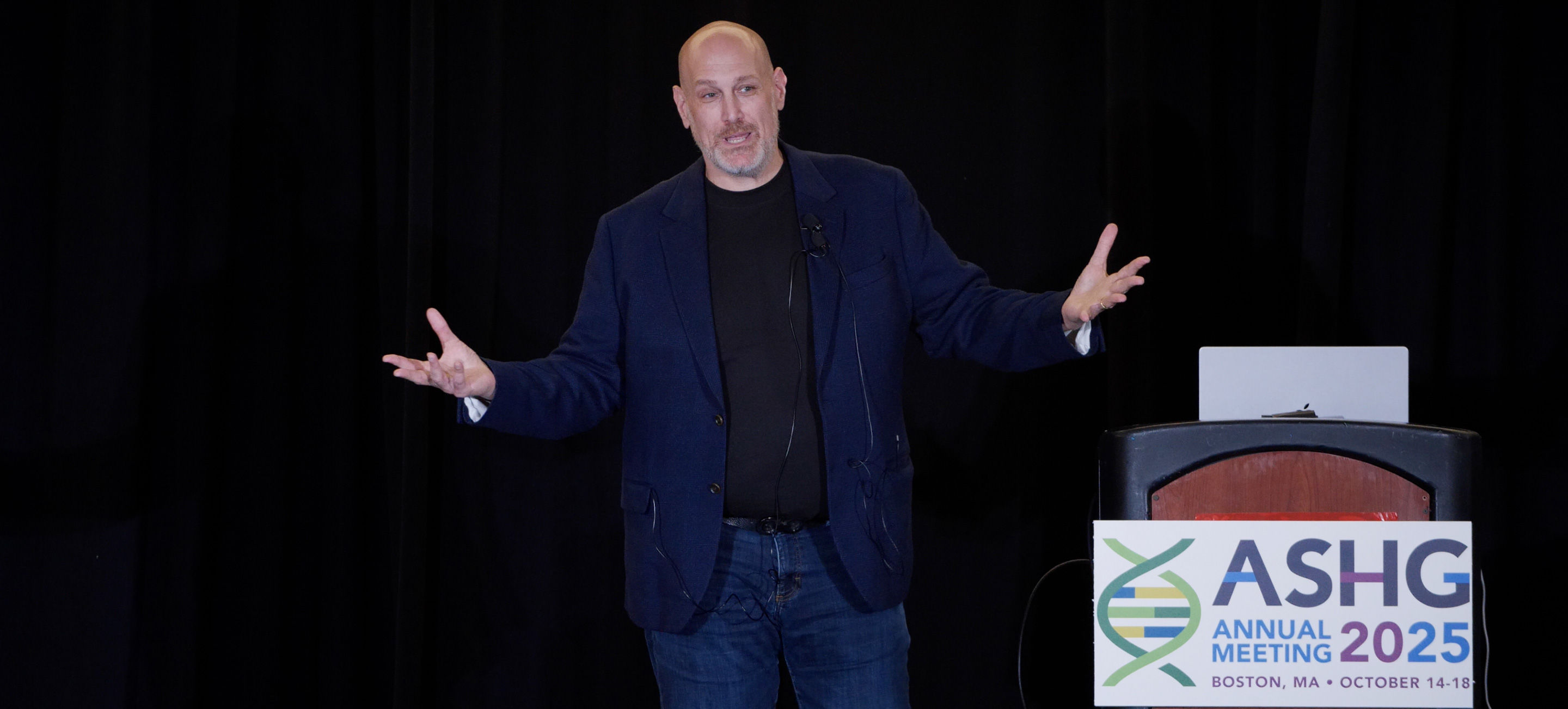
The recent annual meeting of the American Society of Human Genetics (ASHG) served as the crucial stage for a series of major announcements regarding Roche’s sequencing by expansion (SBX) technology. These advances showcased the platform’s capacity for ultra-rapid whole-genome sequencing (WGS) and its flexibility in resolving complex biological queries, from transcript isoforms to concurrent methylation mapping, to enable research and applications that were previously not feasible.
At the core of SBX technology is a sophisticated and proprietary chemistry that translates DNA into an "Xpandomer" - a surrogate polymer 50 times longer than the original molecule - for sequence measurement. This chemistry, combined with a high-throughput sensor array, forms a platform that is fundamentally designed for flexibility and performance, allowing efficient scaling for various future applications based on throughput, read length, and time to result.
Setting a new global benchmark for speed
Perhaps the most immediately striking news from the conference was the confirmation that the SBX technology had achieved a GUINNESS WORLD RECORDS™ title for the fastest DNA sequencing technique.
The ultra-rapid application, known as SBX-Fast, completed the full workflow—from library preparation through VCF generation—in just 3 hours and 59 minutes, surpassing the previous benchmark of 5 hours and 2 minutes. This breakthrough method provides speed and accuracy with an amplification-free workflow that starts with gDNA from sources like blood, saliva, or tissue. The Broad Clinical Labs and Boston Children’s Hospital subsequently applied this method in a research study to demonstrate same day whole-genome analysis for multiple samples.
Addressing the development of this fast method, Mark Kokoris, Head of SBX Technology at Roche Diagnostics Solutions, stated: "Our research teams, in developing SBX-Fast, meticulously optimized every step of the sequencing workflow. This included DNA isolation, library preparation, Xpandomer synthesis, sequencing, and the acceleration of primary analysis, mapping and alignment and variant calling. While the dramatic reduction in the timing led to a Guinness World Record, the true impact lies in what speed and accuracy shown over multiple days and across multiple samples can mean for the scientific community engaged in deciphering complex conditions."
Unlocking transcriptomics with longer reads
The SBX platform also showed significant progress in RNA sequencing through the SBX Simplex Longer RNA (SBX-SLR) method, which targets longer and bi-directional reads. SBX-SLR delivers exceptional throughput, achieving between 2.5 and 4 billion reads per hour with an average read length of 400–600bp.
Longer reads can be vital for resolving transcript isoforms, a regulatory axis of biology that occurs in over 90% of human genes but can be left under-resolved by short-read assays. In the data presented SBX-SLR enabled greater unambiguous isoform identification. In studies using DepMap cancer cell lines, the platform achieved 95% saturation of identifiable isoforms.
Furthermore, in a project utilizing SBX-SLR to study a Melioidosis sample cohort (comprising healthy, survivors, and non-survivors), researchers were able to examine differential gene expression and identify differentially spliced isoforms including in genes associated with immune function and regulation, such as IL1RL1 and IL18R1.
Integrating genomics and epigenomics
A major advancement was the introduction of SBX-Duplex Methylation (SBX-DM), which enables the concurrent detection of DNA variants and methylation signals from a single library preparation.
The research workflow combines SBX-Duplex, a methodology in which both strands of the target DNA are linked in a single read, with a high-fidelity methylation mapping method, TET-assisted pyridine borane sequencing (TAPS), a technology in development by Watchmaker Genomics. This integrated workflow allows for simultaneous DNA variant calling and methylation calling using standard DNA aligner and XOOS methylation caller.
This capability is central to the SBX Multi-Omics framework, which combines SBX-SLD (DNA), SBX-SLR (RNA), and SBX-DM (Methylation). This powerful combination facilitates sophisticated analysis, including long-range phased haplotypes, allele-specific methylation analysis, and phased allele-specific expression.
Moreover, the integration of these signals may have advantages in research applications, for example in Minimal Residual Disease (MRD) research. When sequencing cell-free DNA (cfDNA), SBX-DM successfully detected methylation signals consistent with tissue methylation. This methylation data provides complementary information to cfDNA SNP detection, potentially improving MRD detection in low-TMB samples.
Reflecting on the platform's comprehensive capability across different research domains, Mark Kokoris also noted: "We designed the sequencing by expansion chemistry for flexibility and performance, allowing us to efficiently scale for a wide range of applications, from ultra-high-throughput duplex sequencing to longer reads that enable unambiguous isoform identification and concurrent DNA and methylation analysis, unlocking true multi-omic discovery."
These advances emphasize Roche’s commitment to advancing the entire NGS value chain, moving beyond individual tools to integrated solutions that accelerate research and translational applications across whole genome, whole transcriptome, multiomics, and epigenetics.
ASHG workshop recording
These innovations and more are covered in this recording of our workshop at ASHG 2025. Watch the video to learn more.
*This transcript was generated using an AI-based transcription tool and may contain errors. It reflects the spoken content of a live webinar and has been lightly edited for clarity.
Mitu Chaudhary: My name is Mitu Chaudhary. I will be your moderator, and I will also be introducing our key speakers. I'm a Senior Director, International Business Leader at Roche Sequencing Systems, and my team is responsible for managing our sequencing systems products, which include the AXELIOS platform that we'll be talking about today, as well as our automation platforms.
But essentially very quickly, we do have a rich portfolio of sequencing technologies, primarily in the sample prep space, with our KAPA library prep and target enrichment, and also with our navify® insights portfolio. Then, over a period of time, we have been developing products on other sequencing technologies, building these tools together into effective solutions, for example, our AVENIO assay kits, like our comprehensive genomic profiling kit.
But going forward, this is where our platform comes in. We have talked about the AXELIOS platform, and the product that we will be launching next year will be called AXELIOS 1. This will be the name of the platform that we will be launching next year. And what this really indicates is our commitment to continue to drive innovation on SBX technology; it’s already showing a lot of potential. We are actually going to talk a lot more about the new applications that we have been demonstrating on the backbone of SBX, but this is really the first in its class.
I'm also very happy to announce the pricing of the AXELIOS system. Never heard that question from anybody, I know you're not wondering at all! But I thought I'd just tell you anyway. So, in the United States, the platform will be priced at $USD 750,000. We believe that this pricing will enable adoption across a wide variety of labs for a variety of applications.
The second question nobody ever asks me is, what about operational cost? That's where you will still have to wait just a little bit longer. However, what I can say is this: the platform performs sequencing runs in a much shorter time, and so what we are envisioning here is a price per gigabase that is very, very competitive to the high-throughput systems, at market-standard accuracy.
Now, we did talk a little bit about duplex and simplex, and we'll actually showcase a lot more on this in the upcoming presentation. So, what you will see there, especially with our simplex approaches, we can enable a wider range of use cases and leveraging that very, very high throughput, we actually see that that pricing will enable you to do deeper and broader studies at a scale that has not been possible until now.
With this system in place, AXELIOS 1, and our analytical portfolio with XOOS analysis platform, what we envision is really, across each of these verticals in the sequencing workflow, to have these individual tools and technologies that are very, very capable. But also what you will start to see from us are, at the bottom as I say, Roche assay kits, which are the solutions for the future, for example in the germline space, as well as in the oncology space with things like MRD, genomic profiling and cancer detection.
With that, it is my pleasure to actually introduce the key speakers for today. I'll first introduce Mark and then Katie Larkin.
Mark has nearly 30 years of experience in biotechnology, co-inventing the SBX technology in 2007. He formed Stratos Genomics that same year with co-founders Allan Stephan and Robert McRuer. First, he served as the company's President and Chief Science Officer and then as Chief Executive Officer. He led Stratos through its acquisition by Roche in 2020. Before Stratos, Mark founded BioCaptus in 2003, it was a biotechnology consulting firm. He also served as the Director of Technology for QIAGEN Genomics and was a founding member of Rapigene. He holds a BS in Biochemistry from the University of California, Davis and is an inventor on over 20 US patents.
I'll introduce Katie Larkin as well. Katie is the Director of Clinical Product Development and Strategy at the Broad Clinical Labs, where she helps drive product innovation and shapes the strategic direction to advance BCL's mission. She has been at the institute since 2009 with experience spanning lab operations, clinical sequencing, and next-generation sequencing technologies. Mark, over to you.
Mark Kokoris: So, the problem with me, with a presentation like this, is: where do you stop? Because, for everybody who knows me, I kind of want to relentlessly push in every direction, all the time. So, for my team in Seattle, I just want to say thank you for putting up with me.
I think, getting ready for this presentation—with so many years of pushing on the technology—I keep thinking about seeing the things that we can do, which is very exciting. And so, what we came up with here today is several new applications: we’ll talk about longer RNA sequencing; we’re introducing this bi-directional longer RNA sequencing project that we’re doing with Sanger and the melioidosis sample set; and we’re also extending some work with Aziz Al'Khafaji’s team at Broad.
We’re actually going to introduce some multi-omics work here as well, including some methylation data that we generated, and then show that with some tumor-normal samples. We’ll also introduce target enrichment—I get a lot of questions about that—so we’ll just show a little snapshot of some data there. Then we’ll finish off with some vignettes for whole genome sequencing, FFPE, MRD, and SBX-Fast.
And then you’ll notice the little symbol on there. I don’t know if this has gotten out there yet, but we’ve actually broken the Guinness World Record for the fastest DNA sequencing technique. I’ll show the time at the end of the presentation, and Katie is going to spend her part talking about why that’s important to be able to do.
And so, again, I just really want to thank my team in Seattle for all the hard work. I want to thank the CSI team, and the related teams in Roche, for pushing so hard to put all this material together. I think it’s quite a bit of stuff to cover here, and it’s just an amazing team that I have a lot of respect and admiration for. And if it wasn’t clear before—yeah—I got the world record, so this is a little bit bigger here!
OK, technology overview. We've had two webinars now, several presentations and that seminal pre-print. If you're chemistry-oriented, read the pre-print. It's pretty crazy! I read through it the other day, and I was there for every second of the work we did, and I can tell you I'm still scratching my head with some of the stuff. So, it's a nice read to get some background on the technology prior to the Roche acquisition.
So, we talk a lot about flexibility and performance throughout and that's just for everything that we talk about, you're going to want to be thinking about that flexible operation. It's just kind of implied with everything. We'll show examples of the higher accuracy. The high throughput is pretty much there for everything that we're doing. And then today, we're going to show some of that longer read work that we do and of course showing that world record.
So, the foundation of the technology is Stratos Genomics’ SBX chemistry coming together with the Genia high-throughput array. And, you know, again, you can get a lot of that background information from some of the previous materials.
The AXELIOS system, now we have the pricing, so we know that. What that is, is that synthesis instrument and sequencer, and of course, library preparation, which Jagdeesh Chandrasekar went through quite a bit of that earlier at the CoLabs. So, we'll cover a little bit of that here. And just a little bit of background for those of you who didn't see this before. We break up the sequencing library prep work structures in the SBX-D, which creates that hairpin Y-adapter structure that allows us to make Xpandomers that we can get intramolecular consensus reads on. So that's where that high accuracy applications, and we're going to talk about most of these today.
But then you've got simplex side. So, for example, target enrichment, some of the short read flex stuff, but then also the longer read stuff, which we're going to spend quite a bit of time on today. So, you can look at structural variance, phasing, isoforms, things like that. Again, all of that being leveraged because of the throughput and the capability of the technology. This kind of shows again another way of looking at our scale from low to high. And the read lengths as well, but then being dissected centrally from single omics, to now some of the multi-omics things that we're talking about here.
OK. And then the wheel here, I think we've done most of these things. There are things that are not on the wheel that should be and will be. And I think we're just going to keep going around the wheel filling things in and showing what's possible with the technology.
So, shifting to early access. So, we did work, started this project. End of August, I believe, we installed the system. I see Mike Quail down there in front of the system looking quite happy. So, we did the install, it worked perfectly, and we decided, OK, well, let's do a data set. So, Emma Davenport had some samples that we could run and were a good fit for SBX-SLR, which is what we're going to cover here with this project. And so, we said, well, let's go for it. Let's see if we can get some data to show at the conference.
So the workflow again, SBX Simplex Longer RNA (SBX-SLR) is pretty straightforward. You can see the poly A portion, so you get the directionality of the structure there. We do a Y adapter ligation, and these are kind of custom Y adapters that bring in the sample ID. And if you were to want UMIs you could bring UMIs for other applications there as well, all compatible with our linear amplification protocol. And so after that, you can see the directionally, what the Xpandomer or sequencing reads would look like. And just to put a number, we're looking at 2.5 to four billion reads per hour in that 400-600bp size range. But again, there's a pretty big histogram there. Those are average read lengths. So you'll see we get, you know, quite a few because of the throughput. We get a lot of thousandmers and longer reads out of that.
OK, so melioidosis is a bacterial infection with a mortality rate of 26%, where individual response to treatment varies. And the project we're utilizing looking at SBX-SLR to examine differential gene expression, splicing signatures and disease endotypes. So, for the cohort, I think her cohort was about 1000 in size. We took a subset of that, 90 samples broken apart into healthy, survivors, and non survivors for this particular study, as we were short on time, it just wanted to, to give a look at it.
And again, this is the first time we actually tried to run this in the lab at Sanger, and actually anywhere. So, pretty straightforward, intuitive protocol, 200 nanograms bulk RNA, we used an NEBNext kit for the library preparation, brought cDNA into that Y adapter ligation and then went on to the SBX-SLR workflow to generate reads. We over sequenced, of course, on purpose. We wanted to over sequence just to kind of get a sense of what that would look like. So, we got 138 billion reads in 36 hours. I think that's probably on the lower side. I think we got even more room to expand that quite a bit. Average read length around 400. You can get an idea of the histogram right there. Samples were totaling 90 samples, and for each sample we had 1.5 billion reads, or 3.8 billion reads per hour.
So what can you do with that? Let's dive in a little on the biology, and Emma will cover this in a lot more detail, but I just want to touch on a few things. You can get a sense from the picture there, looking at differentially expressed neutrophil markers for the non-survivors, you can start to differentiate some of the expression there. Just kind of a little snapshot picture. And again, she'll cover a lot of this.
Same thing on genes with differential splicing. Nothing surprising here, you're seeing genes associated with melioidosis, more immune function and regulatory genes. So, really, as expected here, including some of the IG, IGH and BCL genes as well. So really as expected.
Similarly, Gene Ontology, the revealed pathways are associated with immune response and pathogen interactions. So, all making sense. Emma will dive into that, not just here. I imagine she's got quite a bit more analysis to do given how many reads that we were able to generate for this project.
And then taking a quick look at BCL6 and some of the isoforms, we had two here in particular, we looked at a 700 and a 3000 base isoform here. And just looking at transcript usage for this particular one, looking at the group of healthy that yield those yellow boxes up there, you're seeing a different transcript usage there. So again, a lot more to come on this, a lot more detail. Just wanted to touch on it say that this is something that we were doing and looking at, and these are the kind of slides for me that get into the detail that I'm really looking for. It’s OK, well, so longer reads enable more and ubiquitous isoformed identification, I think so.
When you do the comparison to the run that was done for the original 1000 sample cohort, the Illumina run, it was using was 37.5 million paired ends per sample. When you compare that to the longer reads, the longer single ended reads at 37.5 million, you can see the difference in the fraction of isoforms detected. When you bring that up to 75 million, which is actually probably a fairer comparison in terms of total read, you see an even higher number. And go to saturation curve, looking at 300 million reads, you're getting that 99% so you kind of bottom line it here.
From 138 billion reads that we produce for the study, we could have sequenced the entire 1000 sample cohort in 36 hours at a depth about 125 million per sample. Probably around 98% saturation. First time we ever did it. You know, really happy to see this. And then a lot more to come along these lines. And there's a lot of buttons to push. Everyone's going to want to push that length out a little bit more here. These are blood samples so they're already a little bit on the shorter side, but very typical. So I think there's a lot of room for us to kind of move that length a little bit further, move the throughput, but those are going to be things that we continue to work on.
So, staying in the same space as the SBX-SLR with Aziz Al'Khafaji's lab. We added another project, and Brian Haas will be speaking about this tomorrow. Aziz is at the meeting in Australia, so couldn't be here, but was offered to provide a couple of slides here, kind of give some of his perspective on this.
Alternative splicing is a key regulatory axis of biology that must be resolved by RNA-seq assays. And then transcript splicing modulates: protein isoform, translation efficiency, etcetera. And there's just numerous examples of splicing found to be essential in development and drivers of disease so you know, basically driving to that conclusion, splicing variance are deeply under resolved. That's kind of his position on this and why he's really excited. We talk all the time about the kind of things we want to do together in the collaboration.
So, looking at this a little bit more, standard RNA-seq is blind to the rich diversity of proteins emanating from the splice forms of these genes, and the question is, can SBX-SLR longer read lengths enable measurement of transcript isoforms at scale? So that's the question. And the study we did for this is using the DepMap cell lines and you get that picture on the right there to kind of show the spread of the different cell lines used here. The overall project again, SBX-SLR measuring differential gene, isoform, and transcript fusion expression across the DepMap cell lines.
Similar to the previous project, around 96 samples, but in this case they had a modified template switch protocol that they developed. These were a bit longer reads than what we did for the previous, and it shows when we look at the yields here. So, again the throughput over 100 billion reads, around 500 in length, and you can see a noticeable shift to the right in the read lengths there. Then the total reads per hour about 2.8 billion, so kind of right in that range of what we'd expect. Again, the first time we ever ran this project.
Just looking a little bit deeper into it, just an example, GAPDH isoforms about 1.3kb, below you have the reference isoforms by the green box there. And looking at the SBX-SLR is able to unambiguously identify that one contiguous read there as an example. But then the shorter reads, would obviously have a very hard time doing that.
Similar to the previous presentation, looking at the unambiguous isoforms identified, looking at both full splice matches and identifiable isoforms, 95% saturation was achieved with about 58 million reads, or 51 million reads for the ISMs.
Again, the main point here is the workflow flexibility. We talk about it all the time. I think it's a very real thing that I'm looking forward to seeing how people leverage that flexibility, the massive throughput, the ability that we're able to reach into longer read lengths, as well as occupy the lower shorter read lengths at massive throughput. Flexible throughput, I think, is really the advantage here. And then one more statement here. With the 2.8 billion reads per hour, the 96-sample study could be run in three hours at a depth of over 100 million reads per sample.
So, we'll see, and I think Brian is obviously going to keep diving into the data, and Aziz's team will keep looking at that. We'll keep making adjustments to the chemistry and tune the workflow around. But I think out of the gate, you know, really happy with what we're seeing there.
Now shifting to multi-omics, looking at the Simplex Longer DNA (SBX-SLD) side of things, very similar. I mean, I can’t see a whole lot of difference between some of these pictures here. Again, focusing on DNA inputs, 20 to 50 nanograms, I think we can obviously go lower than that, but that's just the range we've tested so far. Same Y adapter ligation compatible with the linear amplification protocol, so very similar to what we showed before. And just one data slide here to show looking at structural variance detection in cancer cell lines.
And again, the same hypothesis here that longer reads can identify more supporting evidence for the structural variance. We note here the true positive criteria for both XOOS, the Roche XOOS suite, as well as DRAGEN, which was used for the study and then the read counts for both. So, again, we were actually using less reads than the comparison here, in both cases, but then kind of pointing out the one thing that jumps out on the slide would be the insertion impact here. And this is pretty much as expected based on some of the prior papers, as well with longer read comparisons.
So, shifting a little bit back to the RNA casing slide I showed before, in terms of the RNA-seq, same thing, same workflow. This is now more for benchmarking, same numbers there we showed before, and just kind of getting an idea with the genome in the bottle cell lines, what are we seeing? Are they concordant gene expression? The answer was yes. Transcript expression, the same thing, yes. In comparison, looks very good, identifying some of the more challenging regions to sequence that are with low mapping quality. We're able to see that with the longer SBX reads, we're able to map better there, whereas there very few reads were mapping at MAPQ greater than five, and that showed in the TPM difference on the left here between the two technologies.
OK. And there's Chen down at the bottom here. You can have a poster. I would encourage people to go and walk by and keep Chen company. Ask him some questions about this. He's going to cover several different topics, but again, looking at somatic SV expression and the measurable expression, perceivable DNA variance for the 1395 cell line.
OK. And then the recount again, about 350 million paired end, versus 350 million single end. So again, a very fair comparison here. Then looking at 32 were missed essentially by Illumina versus 12 here. And, of course, I asked Chen last night. I said, OK, well what are we seeing with the 12? Let's fix that, and of course we're going to go right at it and understand that a little bit more. So again, just data that we just generated very recently. Pretty excited about that.
Now shifting to multi-omics, a little bit more on the multi-omic side. Introducing this idea of SBX duplex with methylation, SBX-DM. And for this, our first attempt here, we're using the Watchmaker Genomics TAPS+ Methyl-seq kit to convert 5mC. So just the high-level overview of SBX-D again, using the hairpin Y adapter structure to make the structure that goes into our linear amplification, and then produces the Xpandomer reads as we've shown and talked about many different ways.
OK, but now if you add in this kit, and again, we just got the kit straight up from them, didn't do any modifications to the kit, and apply this to the SBX chemistry and give a little background on the TAPS chemistry, it’s converting five MC or five HMC to T essentially. And one of the key steps is, there’s many, but I think one of the key steps is that reduction step that they were able to optimize. And I can say, I mean, having done really challenging chemistries, they did a great job of pulling this together. 98% direct conversion with low false positive rates. So, I think it's always tricky finding that balance with chemistry, and they did a really good job of that, and shows in the data.
So thinking about the traditional Methyl-seq, the lower complexity, decreasing sequencing complexity, and the challenges that come with that. Versus the TAPS conversion where you're seeing more of a maintaining of the sequencing complexity with only 1-2% change. And then what does that allow us? It allows us to improve the alignment, and deliver epigenomic and genomic variant information simultaneously.
OK. So what does that look like? TAPS conversion protocol kind of show after the library prep and again, this is where we would apply any other method, and we will of course, we'll look at all the other methods and let people decide what they want to use. So in this case, we applied the TAPS chemistry at that point and then through just normal workflow after that.
OK. So SBX-DM as we've said can concurrently detect DNA variants and methylation signal from a single library. OK, so that's, you make the one library, you convert it, and you get all that information in one sequencing run. So after the base calling, we do demux, intramolecular consensus, and then do reference free methylation detection using the power of the duplex read. After the methylation status is recorded, the converted bases are reverted for mapping and alignment and for that you can actually just use any mapping tool because you're bioinformatically reverting those back.
And then you use the Roche XOOS suite for both DNA variant calling and methylation calling status. So really cool, really efficient. And we'll get into a little bit of the benchmarking that we did here.
OK, so comparing straight up SBX-D versus SBX-DM, looking at the link side, quite comparable. The SBX-DM is a little shorter, but in this particular comparison, but actually had higher coverage. So OK, and that's not like it was so much shorter. That's a big deal there. We see a little difference in F1 scores for both SNV and indel, and this could be both bioinformatically, some tweaks we may want to make, or chemistry, a little bit of both. But we were actually giddy, I think was the word we used in the meeting, seeing how good we did right off the bat with this comparison. Similar to what we've shown before, about five billion reads in one hour sequencing, giving us way over obviously 30x coverage. And that's using concordant duplex bases only for the coverage, just to be clear on that.
OK, comparison to the AF values between both are you know, on par. Nothing really surprising. This is looking at the two different cell lines shown below there, so really as expected.
Looking at the methylation status, or the level of methylation that we're seeing against several other technologies. Again, pretty much in agreement with what we're seeing with other technologies. In particular, looking at TruSeq, the histograms look very, very similar there. So that's good.
And then focusing on methylation patterns. So, on the left, looking at the methylation patterns near the transcriptional start. We actually used this as an opportunity to test SBX-SLR, to generate, to do the gene expression and then generate the high and low categories of expression there. And then took SBX-DM to assess the methylation levels. And then of course applied that to show that the difference that we're seeing between the low and high actually makes sense. And it does.
And similarly, looking at the methylation across different genomics regions pretty much overlapping there. So all good stuff with that.
Now pulling it all together to kind of leverage the power of all three of these approaches here using SBX-SLD (DNA) for the haplotype phasing. Then SBX-DM for co-detection of DNA and methylation variants, and then SBX-SLR (RNA) for gene expression phasing. So what does that look like? And this was our favorite slide. And I can just tell you we all really love this slide. So, focusing on SBX-SLD here. You see the haplotype phasing using the heterozygous SNPs. You can, it's kind of hard for me to see for the picture here, but you can get an idea of the two, the two haplotypes there as they’re hopefully coming through on your screen there.
And then looking at SBX-DM, you see the methylated haplotypes for haplotype one, and then moving on to haplotype two, you can see the unmethylated G to A SNP. You can see the unmethylated haplotype, and you can see the methylated on both haplotypes. So again, you're getting that with the SBX-DM.
And then lastly, SBX-SLR, you're seeing the allele specific expression of the unmethylated copy there that we point out, as well as the Exon-Intron boundary, so really cool. Again, just brand new stuff. Some of this data was just generated within the last few days. So really exciting and we can't wait to carry this on further.
And on point here. So Mahdi will be presenting at AMP. We're going to take this and amp it up a little bit more as we get close to AMP and he'll be presenting on that. I'm actually going to come back to Boston just to see Mahdi present this. So I'm excited for that.
So again, I wanted to get a little bit of a test looking at some FFPE, buffy coat and tumor-normal samples, and get a sense of what that looks like. So we just had five samples of breast cancer, bladder, CRC, for all three sample types and we ran them through just to kind of see what we're seeing here. So we did standard SBX-D, looking at tumor informed MRD in the 60 to 90x range. This is something we've done before showing great data on at ESHG. So we were able to pick five out of five subjects, including a very low TMB sample. So that looks great.
Then looking at SBX-DM we were able to see at 30x coverage, and the reason why we did 30x was the yield on this one time we ran SBX-DM, there was a couple that were a little bit low. So we decided to actually down sample both the 30x for the comparison and that's what we did here. And we're able to see four out of five subjects for both, but it wasn't like we saw five out of five in SBX-D. So we saw very similar performance from both at the similar coverage. So we'll work on making sure that we understand if that coverage was just a born drop off or not, but out of the gate, really exciting stuff.
And again the SBX-DM preserves methylation signal as complementary information for MRD detection. And so we wanted to carry that a little bit further looking at the 30x SBX-DM, looking specifically for cancer specific methylation signals. So we started off with the left looking at differentially methylated sites. And to do that we analyzed paired FFPE blood DMS using SBX-DM.
So we got the count number at that, then we intersected that to narrow the population down a bit with the previously identified cancer specific methylation reporters. So it narrowed it down, and then intersected one more time with our cfDNA to get a cancer specific DMS detection in plasma. So again, this was very recent data, but very exciting to see that we could see that, and Mahdi will cover quite a bit more of this at AMP in a few weeks. Some pretty good stuff and again, the complements of the SNP information improve MRD detection, especially in low-TMB is something that we're, you know, really excited to bring both of these things together with the SBX technology.
So, target enrichment. I get a lot of questions about this. I just wanted to cover it here because I think people deserve to understand what we're doing. So this is actually an SBX simplex approach, using a lot of the same Y adapters I've shown before that would then go through a pretty typical Probe Hybridization, PCR and actually we do use PCR pre and post target enrichment for the steps, and then bringing it through Xpandomer sequencing as normal on the sequencer.
But these read lengths are in a range that is just a workhorse range. So, you'll see the number of reads we're able to generate here. But as with most of these target enrichment applications, you're going to have families in clusters that you then use intermolecular consensus to collapse, both with duplex clusters we show on the left, and simplex clusters on the right to get a consensus read for both types. So that's the basic approach and general approach most people use for that.
And then focusing on the right hand there, from two nanograms of cfDNA using the KAPA HyperExome V2 kits, we generated, we would generate in four hours, we'd be able to do about 48 samples at 340x unique coverage.
And the Phred scores on that would be about 45 to 50 for all clusters versus duplex clusters. So quite respectable there. And we're looking at over 184 billion reads in 24 hours. If you did the six runs as I indicate there, or roughly 288 samples in 24 hours at 340x. So, if you were more interested in germline 30x, you'd be almost 3000 you'd be able to do in 24 hours. And the actual read counts is probably a quarter trillion and I had to get that in just so I could say the word trillion! So just I'm just giving that one up.
Which I'm very excited to keep pushing towards that kind of number of throughput. So anyway, that's target enrichment. I'm really happy to get this into some hands with early access, and see where you go on that.
So just a little jaunt to FFPE and Jagdeesh covered this in his as well, but we do FFPE with a little DNA repair step, and we’re finding that that really helps with the quality of our sequencing there. And then run it through the process very similar to how we’ve covered before. In this particular study we did 18 matched tumor-normal samples, across a range of qualities, and what we saw, and the experimental details are on the right, but essentially, normalized 100 nanograms for each, across both technologies, only greater than 70x. They’re all pretty well matched in terms of the coverage, so there was no advantage there either direction, so around 70x were shown, and what we see is really good per base accuracy, really good error rate by substitution type, and really good homopolymer accuracy for the blue SBX, so really happy with that.
This is a poster, and Mahdi will go into more details looking at concordance again against Illumina. Basically the take home is, highly concordant. He'll go through this in more detail to go through the examples if you visit him at the poster, he’s quite exceptional. So I would recommend people go and sit and talk with Mahdi as well.
OK, so MRD, I showed a version of this at ESHG. We've just added more samples to the data set here. It's actually a 96 sample set, so expanded a little bit. Maybe a little bit more bottom of the tube samples here. So, a little bit more challenging, but carrying this through an MRD, SBX-D workflow, and again, 96 samples.
What we saw here was we were able to detect 41 out of 47 MRD samples called correctly. I think this is actually quite an impressive outcome here for this result. And I think it'll be a lot more of this coming up in the coming months. And Kendall there on the right, she'll be covering this in her poster, so I invite people to go see Kendall. Kendall's a key member of our biochem team and does a lot of the things that make us able to make these Xpandomers. So, I encourage people to go visit Kendall. She'll do an overview of the technology there as well and answer questions.
OK, the big finish and we'll hand off to Katie soon after this. So, doing SBX-Fast is essentially a PCR amplification, linear amplification-free workflow, as we say here, running through the SBX-D protocol. And we've talked about this at several meetings already, but essentially the idea is, how can you quickly go through and get a single genome or a trio genome? And so just a little bit of a snapshot here. We've done quite a bit of work on different samples over many months and essentially were able to identify a number of different types of variants, in a number of different samples. This is previous data, we added a bunch more. All of them we’re able to identify correctly.
OK. So, the big number, so we now have sequenced a genome from sample, and this is an HG002 sample from DNA sample through to VCF in three hours and 59 minutes. And we've done this many, many times as Katie will show. So really, really excited. And we're not just doing this as a vanity thing. There's a lot of really good reasons to want to be able to do this as Katie will cover, and so really exciting to be able to see this type of result, and the impact that's going to have.
And I think there's a lot of other things, again, focusing on the flexibility of SBX that we're going to be able to do. This is a project that we started talking about last summer, working on in earnest in November, and the teams really came together. It's a fantastic group of people that we work with to make this result, to be able to demonstrate this. And so, I think pretty exciting there. So, three hours and 59 minutes.
This kind of breaks down a little bit of the processing steps there, so you can get an idea of the timing and Jagdeesh will have a slide, a poster that he'll go through and talk about some of the SBX-Fast work there. And as I mentioned before, throughout, we’ve got a nice, a great presentation tomorrow. I encourage everybody to go to look at some of this SBX-SLR work. Both Brian and Emma will be covering, and Yutaka Suzuki will also be covering some of the spatial work. And I think it's going to be a great demonstration of the things you can do with SBX. I encourage people to go to that.
And so, the last thing here. So, I can remember when I got excited by seeing a single X-NTP extend off the end of a primer. And I actually, you know, that was 2014. So, it was seven years just to get to that point. And so, I think the one last thing I’d like to finish on, the message is, essentially this is pretty hard work that we do here. And you know, everybody has their fears, fear of failure, fear of not getting money, not being able to fund your work or run your projects. And I think the thing I've learned over all the years of what we've done for SBX is you've got to be able to turn that into creativity and find the grit to keep going.
Because I can think about so many different reasons why it would have been so much easier just to kind of not try and solve all these problems. But I've had the great fortune to work with wonderful people, and we figured things out, and we've carried on, and we've pushed forward to keep inventing and using that energy to drive things forward. And I think that’s the message is, we've got a lot of challenges in front of us for all of our work that we have to do. And I think we have to persist and keep pushing through and keep innovating in all the work we're doing. And I hope that SBX can help contribute to that and help people with their projects and move sequencing into a new era. And I believe firmly that we owe that to the people whose shoulders that we are standing on now, the brilliant people that we have had the opportunity to learn from, as well as the people who are the next generation, who we are modelling and showing the way for.
So again, I'm really excited about being able to be here, the things we've been able to do and just to be able to talk to the team here. So, with that, I thank you very much.
Contact us
Do you have questions about our products or services? We’re here to help. Contact a Roche representative in your region.
Explore more
Contributors
Roche Diagnostics
Explore articles from our community
Contact us
Do you have questions about our products or services? We’re here to help. Contact a Roche representative in your region.
The AXELIOS 1 sequencing platform and sequencing by expansion (SBX) technology are in development and not commercially available. The content of this material reflects current research study results and/or design goals. The AXELIOS 1 sequencing platform based on SBX technology will be launched for Research Use Only. Not for use in diagnostic procedures. AXELIOS is a trademark of Roche.